Professional Brake Bleed Service in Chicago, IL

  • ASE-Certified Techs
  • Same-day diagnostics
  • Warranty-backed repairs
  • Financing available

Your braking system relies on hydraulic pressure to work correctly. When you press the pedal, that force should transfer immediately to the wheels. If the pedal feels soft, spongy, or sinks toward the floor, there is a serious problem inside the hydraulic lines.

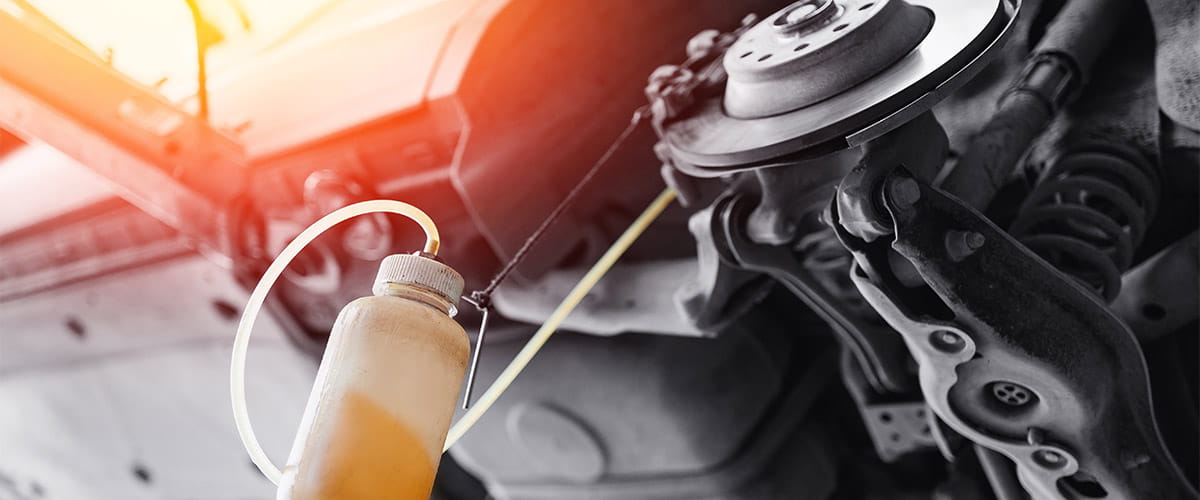
A professional Brake Bleed service removes trapped air from your brake lines so the system can build full pressure again. Air bubbles compress under your foot, which drastically reduces braking force and increases stopping distance, especially in sudden stops.
CALL NOWCALL NOW
Shop Tires on Sale for Chicago: choose from more than 90,000 options


Vehicles We Service in Chicago, IL

Whether you drive a reliable daily commuter or a high-performance luxury car, our certified technicians in Chicago, IL, have the expertise and specialized tools to get the job done right. Check the list below to see the major domestic and import makes we service:
Acura
Aston Martin
Audi
BMW
Cadillac
Chevrolet
Chrysler
Dodge
Ferrari
Ford
Honda
Hyundai
Infiniti
Jaguar
Jeep
Kia
Lamborghini
Land Rover
Lexus
Mazda
Mercedes-Benz
MINI
Nissan
Porsche
Ram
Subaru
Tesla
Toyota
Volkswagen
Volvo


Service quality we stand behind

like icon
10+ years
in business
money icon
12 month
warranty on labor
certificate icon
ASE-Certified
Technitians
car icon
All makes
and models

4.7

Trusted by Chicago drivers since 2011

United Tires started as a single tire shop on the Northwest Side and has grown to multiple locations across the city and suburbs. The core team hasn't changed much, most of our senior techs have been here over a decade. We work on everything from daily drivers to fleet vehicles and classic restorations, and we stand behind every repair with a 12-month warranty on parts and labor.


Request a quote

Tell us more about your issue and get a free consultation

CALL NOW


Why Air in Brake Lines Is So Dangerous

Brake fluid is an incompressible liquid, which is exactly what you want in a hydraulic system. Air, on the other hand, is a compressible gas. When air bubbles are trapped in the brake lines, part of your pedal effort is wasted compressing those bubbles instead of clamping the pads against the rotors.
This leads to:
  • A soft or “mushy” pedal feel
  • Inconsistent brake response from one stop to the next.
  • Longer stopping distances, even at moderate speeds.
In an emergency, that loss of pressure can be the difference between stopping in time and sliding into the vehicle ahead.

Common Causes of Air in Brake Lines

Air can enter the hydraulic system anytime the lines are opened or the fluid boils:
  • Recent brake repairs where calipers, lines, or the master cylinder were replaced or disconnected.
  • Low brake fluid levels that allow air to be drawn into the system.
  • Severely overheated brakes that cause fluid to boil and create vapor pockets.
Even a small amount of air can cause a very noticeable change in pedal feel and braking performance.


Signs You Need a Brake Bleed

Brake Bleed
You should schedule a professional brake bleed check as soon as possible if you notice:
  • A soft or spongy brake pedal that lacks its usual resistance.
  • The pedal travels much farther than normal before the vehicle begins to slow.
  • The pedal firms up temporarily when you pump it several times in a row.
  • Inconsistent braking performance from one stop to the next.
These are classic signs of air trapped in the lines and should not be ignored.

Our Process: Inspect, Bleed, and Verify

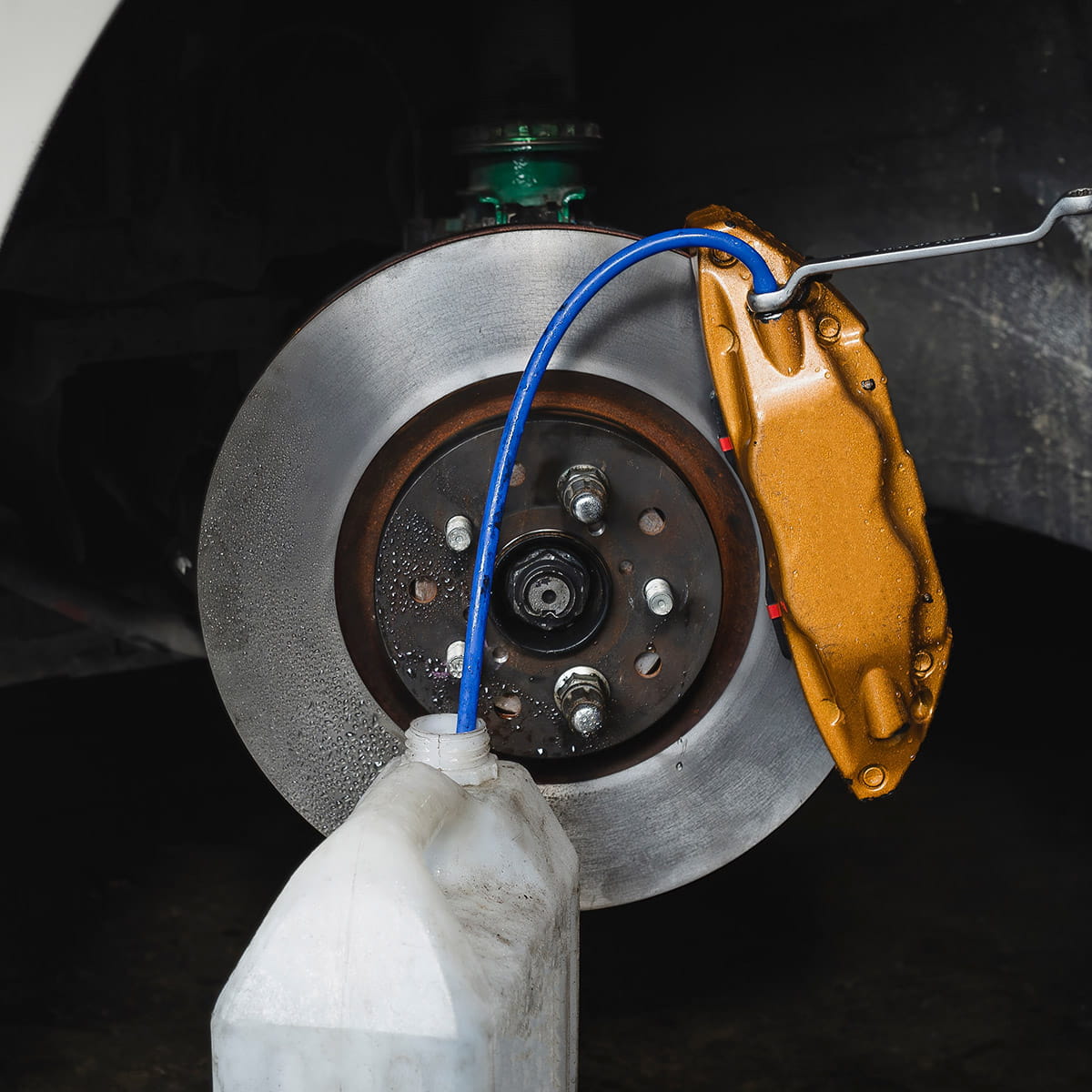
Bleeding brakes is a controlled procedure that purges air from the hydraulic system and replaces it with solid columns of fluid again. Our process typically includes:

1. Comprehensive Brake Inspection

We do not guess. Before any hydraulic lines are opened, we perform a complete evaluation of your stopping system. This dedicated Brake Inspectionallows us to determine exactly why air entered the lines—such as a leaking caliper or a failing master cylinder—ensuring we fix the root cause, not just the symptom.

2. System Setup

We raise the vehicle safely, remove the wheels as needed, and access the bleeder screws at each caliper or wheel cylinder.

3. Fresh Fluid Supply

We ensure the master cylinder is filled with the correct DOT-rated brake fluid specified by the vehicle manufacturer.

4. Sequential Bleeding

Using the manufacturer-recommended sequence, we open each bleeder screw in turn and flush fluid through until all visible air bubbles have been expelled.

5. Level Checks

Throughout the procedure, we make sure the master cylinder never runs low to avoid introducing new air into the system.

6. Final Pedal Test

Once the process is complete, we confirm the pedal is firm, consistent, and builds pressure immediately on the first push. Every brake bleed we perform is covered by our labor warranty, so if the pedal tells a different story after you leave, we make it right.

How a Brake Bleed Relates to Other Brake Services

A Brake Bleed is focused specifically on removing air and restoring hydraulic pressure. After the initial evaluation, this service may be recommended alone or together with other repairs, depending on what we find.

When Pads Are the Issue: Brake Pad Replacement

If the pedal feels normal but you hear squealing or grinding, the concern may be friction material rather than hydraulics. In that case, Brake Pad Replacement restores braking power by installing new pads with proper thickness and heat capacity.

When Rotors Are the Issue: Brake Rotor Replacement

If your steering wheel shakes or the pedal pulses under your foot, warped or uneven rotors are often the cause. Brake Rotor Replacement corrects this by installing new, flat discs that allow the pads to clamp evenly and smoothly during every stop.

When Fluid Is Degraded: Brake Fluid Flush

If we find that your brake fluid is dark and moisture-contaminated, a Brake Fluid Flush may be the correct service. A flush replaces the old fluid throughout the entire system with fresh fluid, improving pedal feel and protecting internal components from rust and boiling.

Why Addressing a Soft Pedal Early Matters

A spongy pedal is often the first and clearest warning that your hydraulic system cannot build full pressure. Handling it quickly is almost always simpler and less expensive than waiting. Ignoring that warning can lead to fluid boiling, repeated overheating, and long-term damage to components like the master cylinder and ABS module, turning a focused repair into a large, multi-part job.

Your Duty to Maintain Safe Brakes

Illinois law requires that every vehicle operated on public roads be equipped with safe, functional brakes on all wheels. Braking performance is not just a maintenance matter; it is a core part of your legal responsibility as a driver. If neglected hydraulic issues contribute to a collision—because the car simply did not stop as it should—that condition can become a key factor when determining fault, liability, and how insurance claims are settled.

Firm Pedal, Backed by Our Warranty

We use only DOT-rated brake fluid matched to your vehicle's specification and bleed every line in the correct manufacturer sequence to ensure zero air remains in the system. That precision carries a 1 year unlimited mileage parts and labor warranty, giving you full confidence at every stop.


Frequently Asked Questions (FAQ)

Is a brake bleed the same as a brake fluid flush?

No. A brake bleed focuses on removing air from the lines to restore hydraulic pressure. A brake fluid flush replaces the old fluid throughout the system with new fluid. In some cases, both procedures may be performed together if the fluid is old and air is also present.

Do I need a brake bleed after every brake job?

Not always, but often. Any time the hydraulic system is opened—such as replacing calipers, hoses, or the master cylinder—it is best practice to bleed the lines to make sure no air remains trapped. Your technician will determine if bleeding is required based on the work performed and how the pedal feels afterward.

Can I drive with a slightly soft brake pedal?

Driving with a soft pedal is not recommended. Even if the vehicle still stops, you have less hydraulic reserve and longer stopping distances. Air in the lines can worsen over time or appear suddenly again after hard braking. The safest option is to have the system evaluated and bled as needed.

Can I bleed brakes myself at home?

While it is possible to bleed brakes as a DIY project, incorrect technique can leave air trapped in the system or introduce new air, making the situation worse. Modern vehicles with ABS and electronic brake control systems are particularly sensitive to improper bleeding procedures. Because brakes are your most critical safety system, this work is best handled by trained technicians with the correct tools.


Restore a Firm, Confident Brake Pedal

A soft or spongy brake pedal is a clear signal that your hydraulic system needs attention. Removing trapped air from the lines is one of the most effective ways to restore a solid pedal and predictable stopping performance.


Need a Professional Opinion?

If you are looking for a reliable brake bleed near me, our local Chicago mechanics perform thorough evaluations to determine whether your vehicle needs a Brake Bleed, a fluid flush, or a different repair altogether. You get a clear mechanical diagnosis and the correct solution.
CALL US AT +1-312-212-0546


Related Services