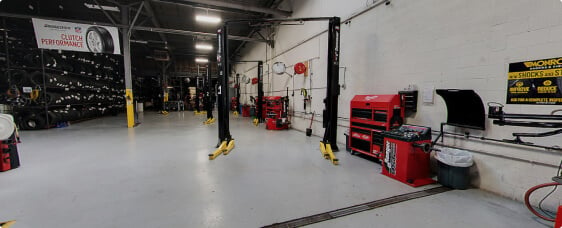
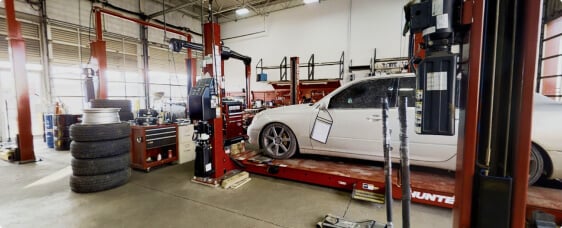
Professional Brake Fluid Flush in Chicago, IL

  • ASE-Certified Techs
  • Same-day diagnostics
  • Warranty-backed repairs
  • Financing available

When you press the brake pedal to slow down on the Kennedy Expressway, you expect an immediate, solid response. If that pedal feels soft, spongy, or sinks toward the floorboard, your hydraulic system is compromised.

If you are experiencing a dangerous loss of pedal pressure, it is not always caused by worn mechanical parts. Often, it is caused by heavily degraded hydraulic fluid. A professional Brake Fluid Flush removes contaminated fluid from your vehicle's lines and replaces it with fresh, high-boiling-point fluid to restore a firm pedal and confident stopping power.
CALL NOWCALL NOW
Brake Fluid Flush in Chicago, IL


Why Does Brake Fluid Need to Be Flushed?

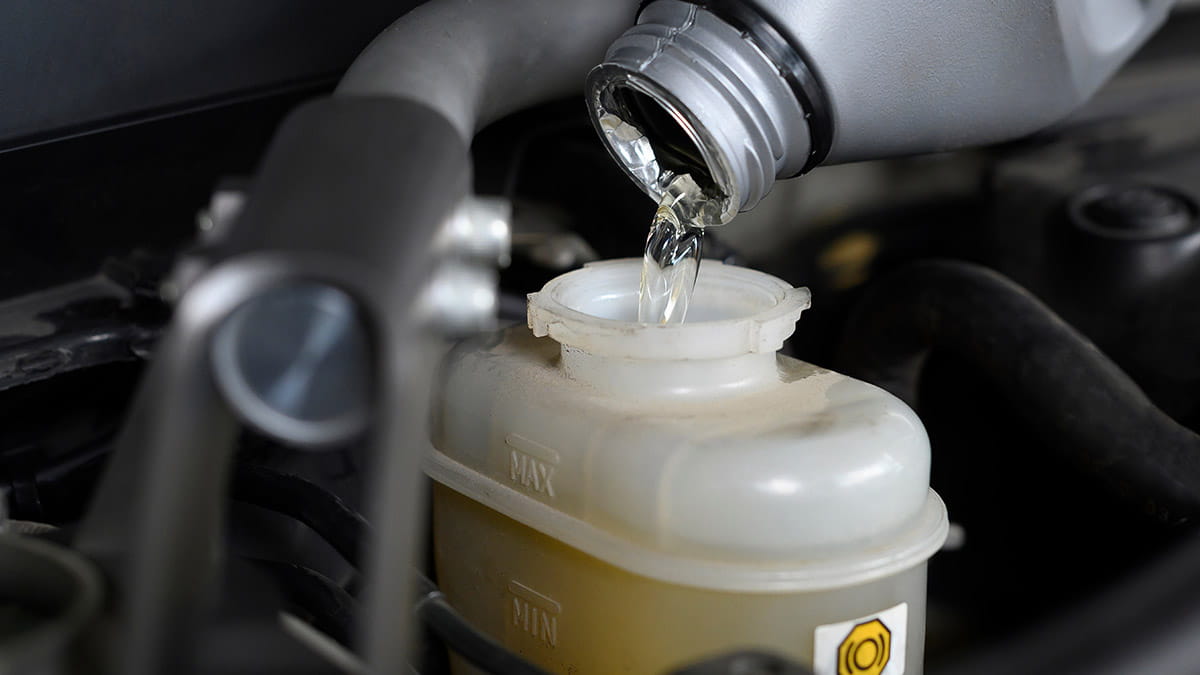
Brake fluid is a specially formulated hydraulic liquid designed to operate under extreme heat and pressure. However, standard DOT 3 and DOT 4 brake fluids are hygroscopic, meaning they naturally absorb moisture from the atmosphere over time.
Even in a sealed system, brake fluid typically absorbs moisture at a rate of 1% to 2% per year. This moisture contamination creates two critical problems for your vehicle:

1. Dangerously Low Boiling Points

Brake parts generate immense heat during heavy city driving. Fresh brake fluid has a very high boiling point to handle this heat. However, just 2% moisture content can reduce the boiling point of DOT 3 fluid by up to 135°F. If the fluid boils and turns into vapor under heavy braking, your pedal will suddenly sink to the floor, resulting in a terrifying loss of stopping power.

2. Internal System Rust

Moisture trapped inside your brake lines causes the steel components to rust from the inside out. Over time, this internal corrosion can destroy expensive hydraulic parts, including the master cylinder, brake calipers, and the electronic ABS (Anti-lock Braking System) module.

Signs Your Vehicle Needs a Brake Fluid Flush

Unlike brake pads that squeal when they are low, degraded brake fluid relies entirely on how the pedal feels. You should schedule a professional brake fluid check immediately if you notice:
  • A Spongy Pedal: The brake pedal feels squishy, soft, or lacks its normal resistance.
  • Increased Pedal Travel: You have to push the pedal noticeably closer to the floor before the vehicle begins to slow down.
  • Pumping the Brakes: You have to "pump" the pedal a few times to get the vehicle to stop completely.
  • Dark, Murky Fluid: Fresh fluid is nearly clear or slightly amber; heavily contaminated fluid looks dark brown or black.
  • ABS or Brake Warning Light: Your dashboard indicates a hydraulic pressure issue or low fluid level in the reservoir.


Vehicles We Service in Chicago, IL

Whether you drive a reliable daily commuter or a high-performance luxury car, our certified technicians in Chicago, IL, have the expertise and specialized tools to get the job done right. Check the list below to see the major domestic and import makes we service:
Acura
Aston Martin
Audi
BMW
Cadillac
Chevrolet
Chrysler
Dodge
Ferrari
Ford
Honda
Hyundai
Infiniti
Jaguar
Jeep
Kia
Lamborghini
Land Rover
Lexus
Mazda
Mercedes-Benz
MINI
Nissan
Porsche
Ram
Subaru
Tesla
Toyota
Volkswagen
Volvo


Service quality we stand behind

like icon
10+ years
in business
money icon
12 month
warranty on labor
certificate icon
ASE-Certified
Technitians
car icon
All makes
and models

4.7

Trusted by Chicago drivers since 2011

United Tires started as a single tire shop on the Northwest Side and has grown to multiple locations across the city and suburbs. The core team hasn't changed much, most of our senior techs have been here over a decade. We work on everything from daily drivers to fleet vehicles and classic restorations, and we stand behind every repair with a 12-month warranty on parts and labor.


Request a quote

Tell us more about your issue and get a free consultation

CALL NOW


Clear Findings and Professional Recommendations
Brake Fluid Flush
We do not recommend fluid flushes blindly. After our technicians test the moisture content of your fluid and physically check your hoses for leaks, we provide a clear recommendation based on exactly what we find.
If your fluid is heavily contaminated, a Brake Fluid Flush is the correct service. If air has entered the lines due to a recent repair but the fluid is otherwise healthy, a simple Brake Bleed may be the appropriate next step. If your soft pedal is accompanied by a steering wheel vibration, we may also recommend a Brake Rotor Replacement. The goal is to accurately diagnose the hydraulic or mechanical issue so the repair precisely matches the condition of your vehicle.
Hydraulic brake problems need the right recommendation before the right service can happen. That is why our brake fluid flush service is backed by our warranty and carried out with the professional care this type of safety-critical work demands.

Why Routine Hydraulic Maintenance Matters

Addressing contaminated brake fluid early is a highly cost-effective way to protect your vehicle. A routine fluid flush is a straightforward maintenance service, whereas replacing an internally rusted ABS module or seized brake calipers can quickly turn into a massive repair bill. Flushing the system at the recommended intervals preserves the life of your expensive hydraulic components.

The Responsibility of Driving on Safe Brakes

Operating a vehicle with a compromised hydraulic system is a serious safety and legal liability. Under Illinois traffic laws, drivers have a strict duty to maintain a roadworthy vehicle, and failing to stop safely can be categorized under reckless driving statutes if it endangers others. If boiled, moisture-contaminated brake fluid increases your stopping distance and contributes to a collision, that neglected maintenance can become a major factor in determining fault. Maintaining your hydraulic system protects your safety and shields you from the severe financial and legal consequences of an avoidable accident.

Our Process: Inspect, Flush, and Verify

To ensure your hydraulic system is fully restored, our technicians follow a precise, methodical process:
1. Comprehensive Brake Inspection
Before hooking up any flush equipment, we perform a dedicated Brake Inspection. This allows us to verify that a fluid flush is actually what you need, rather than a mechanical repair like new pads or rotors.
2. Old Fluid Extraction
We safely extract the dark, contaminated fluid from the main master cylinder reservoir.
3. System Pressurization
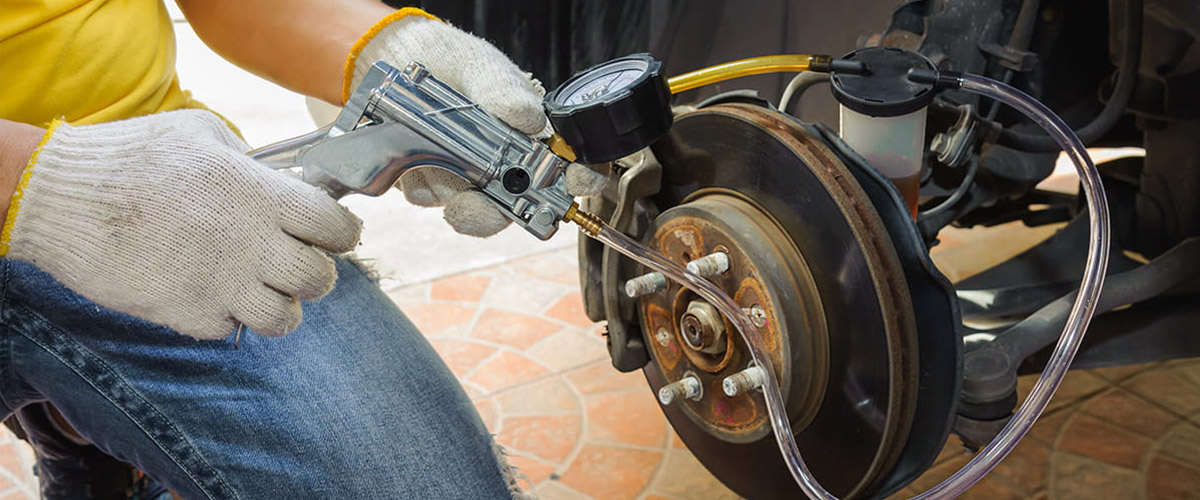
We use professional equipment to supply a continuous flow of fresh, premium DOT-approved brake fluid into the system under pressure.
4. Line Flushing
We open the bleeder valves at all four wheels, flushing out the old fluid, moisture, and any microscopic rust particles until the new fluid runs perfectly clear.
5. Final Verification
We torque all bleeder valves to factory specifications, verify the final fluid level, and road-test the vehicle to ensure the pedal is absolutely firm and responsive.


Professional Hydraulic Service You Can Rely On

Brake fluid condition affects far more than just what sits in the reservoir. Restoring proper hydraulic response takes experienced technicians, the right equipment, and a careful service process focused on pedal feel, system condition, and overall braking confidence. For that reason, every brake fluid flush we perform is backed by our 1-Year Unlimited Mileage Warranty Against Manufacturing Defects & Failures. It is one more way we stand behind the quality of the service and the care that goes into every hydraulic brake job.


Frequently Asked Questions (FAQ)

How often should a brake fluid flush be performed?
Most vehicle manufacturers recommend a complete fluid flush every two to three years, or roughly every 30,000 miles. Because brake fluid absorbs atmospheric moisture regardless of how many miles you drive, the time interval is often more important than the mileage.
What is the difference between a fluid flush and a brake bleed?
A flush replaces all the old, contaminated hydraulic fluid in the entire system with fresh fluid. A bleed simply extracts localized air bubbles from the lines at the wheels to restore pressure, usually after a mechanical repair.
Can I just top off the brake fluid myself?
Topping off low fluid does not remove the moisture or rust already trapped inside the lines. Furthermore, if your fluid level is noticeably low, it almost always means your brake pads are critically worn or there is a dangerous leak in the system. Rather than just adding fluid, you should have a technician physically evaluate the components.
Does a fluid flush fix a squeaking brake?
No. Hydraulic fluid only affects how the pedal feels and how force is transmitted to the wheels. If your brakes are squeaking or grinding, the problem is mechanical. You will need a professional evaluation to check the physical condition of your pads and rotors.


Restore Firm, Predictable Stopping Power

Don't ignore a soft brake pedal. Getting the moisture out of your hydraulic lines is a fast, highly effective way to restore your vehicle's braking performance and protect expensive components from internal rust.


Need a professional opinion?

If you are looking for a reliable brake fluid flush near me, our local Chicago mechanics provide thorough evaluations to test your hydraulic fluid and determine exactly what your vehicle needs to stop safely.
CALL US AT +1-312-212-0546


Related Services