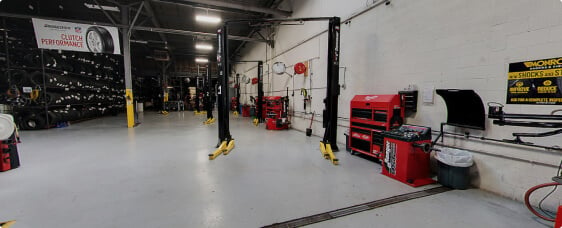
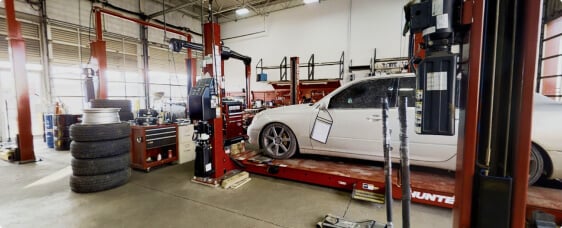
Professional Wheel Alignment in Chicago, IL

  • ASE-Certified Techs
  • Same-day diagnostics
  • Warranty-backed repairs
  • Financing available

If your car pulls to one side, your steering wheel sits crooked, or your tires are wearing out faster than they should, a wheel alignment may be exactly what your vehicle needs. Wheel alignment is one of the most important services for protecting tire life, restoring stable handling, and keeping your vehicle driving the way it was designed to.

Get professional wheel alignment in Chicago, IL, performed with precise equipment and a careful inspection of the steering and suspension components that affect your vehicle's geometry. In a city full of potholes, rough pavement, winter damage, and daily stop-and-go traffic, staying on top of alignment is one of the simplest ways to protect both your safety and your wallet.
CALL NOWCALL NOW
Professional Wheel Alignment in Chicago, IL


Service quality we stand behind

like icon
10+ years
in business
money icon
12 month
warranty on labor
certificate icon
ASE-Certified
Technitians
car icon
All makes
and models

4.7

Trusted by Chicago drivers since 2011

United Tires started as a single tire shop on the Northwest Side and has grown to multiple locations across the city and suburbs. The core team hasn't changed much, most of our senior techs have been here over a decade. We work on everything from daily drivers to fleet vehicles and classic restorations, and we stand behind every repair with a 12-month warranty on parts and labor.


Request a quote

Tell us more about your issue and get a free consultation

CALL NOW


How Much Does Wheel Alignment Cost in Chicago?

Wheel alignment pricing depends on vehicle type, suspension design, and whether your car needs a front-end alignment or a full four-wheel alignment.

Standard Front-End Alignment:
$90 – $140
Four-Wheel Alignment:
$110 – $180
Performance, luxury, or specialty vehicles:
Higher depending on chassis design and adjustment complexity.


Why Chicago Driving Throws Alignment Off

Chicago roads are rough on front-end geometry. Potholes, curbs, broken pavement, winter freeze-thaw cycles, and repeated impacts from daily city driving all knock alignment angles out of specification over time.
Even a single hard pothole hit can be enough to change toe or camber settings. That means a vehicle that drove perfectly straight last week can suddenly start pulling, wandering, or chewing through tire tread after one bad impact.

Why Wheel Alignment Matters

Wheel alignment is the process of adjusting your suspension angles so your tires meet the road correctly. When those angles drift out of spec, your tires no longer roll straight and true. Instead, they begin to scrub across the pavement, forcing your steering and suspension to work harder than they should.
A proper alignment does more than straighten the steering wheel. It helps your car track predictably, improves tire life, reduces strain on critical front-end parts, and supports safer braking and cornering. In other words, wheel alignment is not just a tire service—it is a foundational steering and suspension service.

Safety and Drivability

Wheel alignment has a direct effect on how safe and predictable your vehicle feels on the road. When the wheels are not aligned properly, the car may drift, wander, or respond unevenly to steering input. That makes everyday driving more tiring and can make emergency maneuvers less precise.
A properly aligned vehicle is easier to control, more stable under braking, and more predictable at highway speed. It also helps keep all four tires sharing the load the way they were intended to, which supports safer handling in rain, on rough pavement, and in sudden avoidance situations.

Signs you may need a wheel alignment

Your vehicle usually gives warning signs before tire wear becomes severe. If you notice any of the following, it is time to have your alignment checked:
  • Vehicle pulling or drifting to the left or right
  • Steering wheel sits off-center while driving straight
  • Uneven tire wear, especially on the inner or outer edges
  • Loose or wandering steering feel
  • Steering wheel vibration
  • Squealing tires during normal turns
  • Reduced straight-line stability on the highway
  • Recent impact with a pothole, curb, or road hazard
  • Recent suspension or steering repair

What a wheel alignment corrects

A professional alignment adjusts the key angles that determine how your tires sit on the road. Depending on your vehicle, this may include:
  • Toe: Whether the tires point inward or outward.
  • Camber: Whether the tires lean inward or outward at the top.
  • Caster: The steering pivot angle that affects straight-line stability and steering return.
When these angles are off, the vehicle may still be drivable, but it will not drive correctly. Over time, the extra drag and instability create wear that spreads into other parts of the front end.

Alignment vs. Suspension Inspection

Not every handling problem can be fixed with a wheel alignment. Because your wheels are bolted directly to moving suspension parts, we follow a strict diagnostic flow to ensure you never waste money on the wrong service.
  • When We Recommend a Suspension Inspection: If you hear loud clunks, popping noises, or metal-on-metal rattling when driving over Chicago potholes, a physical part has failed. A wheel alignment cannot fix a torn control arm bushing or a broken tie rod. If you have these symptoms, we will advise starting with a Complete Suspension Inspection to find and replace the broken component first.
  • The Alignment Pre-Check: If your vehicle is simply pulling to one side, the steering wheel is crooked, or your tires are wearing unevenly—but there are no clunking noises—we start with an Alignment Pre-Check. Before putting your car on the alignment rack, our technicians physically test your steering linkages and ball joints to ensure they are tight and structurally sound.
  • The Green Light for Alignment: If your front-end components pass the pre-check and are fit for adjustment, we proceed with the Precision Wheel Alignment. If we do find a worn part during the pre-check, we stop and show you exactly what needs to be repaired first, so you never pay for an alignment that your vehicle can't hold.

The Alignment Pre-Check:

If your vehicle is simply pulling to one side, the steering wheel is crooked, or your tires are wearing unevenly—but there are no clunking noises—we start with an Alignment Pre-Check. Before putting your car on the alignment rack, our technicians physically test your steering linkages and ball joints to ensure they are tight and structurally sound.

The Green Light for Alignment:

If your front-end components pass the pre-check and are fit for adjustment, we proceed with the Precision Wheel Alignment. If we do find a worn part during the pre-check, we stop and show you exactly what needs to be repaired first, so you never pay for an alignment that your vehicle can't hold.

Components That Suffer Without Proper Alignment

Driving too long with poor alignment does not just wear out tires. It can accelerate wear across the entire steering and suspension system. Components commonly affected include:

Why Fixing Alignment Early Saves Money

We understand that alignment service can feel easy to postpone because the car may still seem "good enough" to drive. But poor alignment quietly costs money every mile. It scrubs tire tread away faster, puts extra load on steering and suspension parts, and can shorten the life of expensive components that work around the wheel ends.
Spending a modest amount on an alignment today is far less expensive than replacing a damaged set of tires, worn tie rods, overworked struts, and other neighboring parts later.


Our Process: Inspection to Precision Alignment
Professional Wheel Alignment

1. Initial Evaluation

We begin by listening to your concerns and checking for the classic signs of alignment trouble, such as pulling, drifting, a crooked steering wheel, or recent pothole impacts.

2. Suspension and Steering Pre-Check

Before setting alignment angles, we physically inspect the front-end parts that affect wheel position. If a tie rod, ball joint, or strut is failing, the alignment will not hold.

3. Precision Alignment Service

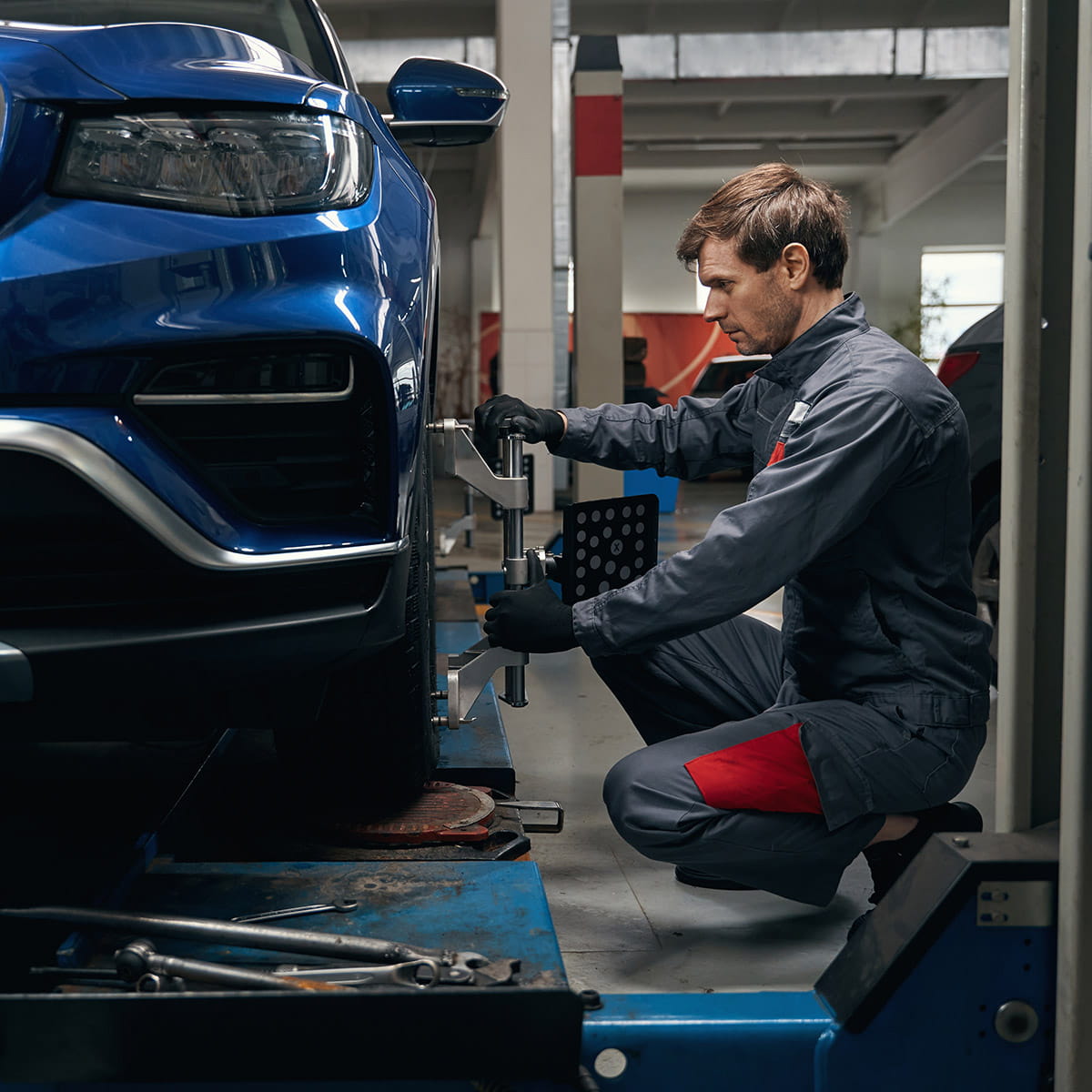
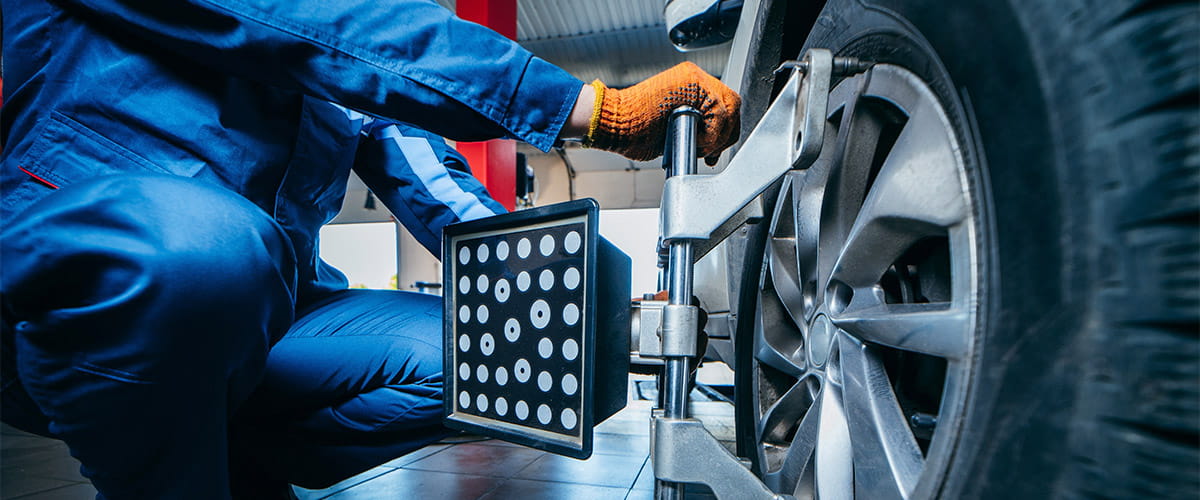
Using professional alignment equipment, we measure the current angles and adjust toe, camber, and caster to exact factory specifications. We center the steering wheel and confirm the vehicle tracks correctly.

4. Final Review

We explain the results clearly, including what was adjusted and whether any worn parts may need attention going forward.
Getting the vehicle to track straight takes the right equipment and careful setup. Our wheel alignment service is covered by labor warranty.

The Final Step After Suspension Repair

Why We Recommend Alignment After Repairs

Your steering, suspension, and wheels work together as one connected system. When we replace a worn tie rod, a damaged control arm, or a blown strut, it physically changes how the wheel sits on the road. That is why wheel alignment is the mandatory final step after most steering and suspension repairs. It helps restore ideal steering feel, protects your tire investment, and makes sure the new parts do not wear prematurely because of incorrect geometry.

DIY vs. Professional Alignment

Modern wheel alignment is not a driveway guess-and-check service. It requires specialized laser equipment, precise measurements, and an understanding of how worn parts affect final readings.

Common DIY mistakes avoided with professional service:

  • Trying to "eyeball" straight steering or using the "string method" in your driveway
  • Adjusting alignment without checking worn steering parts first
  • Replacing tires without correcting the cause of uneven wear
  • Missing underlying suspension damage after a hard pothole impact


Warranty Coverage for Wheel Alignment

A proper wheel alignment comes down to careful measurements and exact adjustments. Every wheel alignment we perform is backed by our labor warranty.


Frequently Asked Questions (FAQ)

How often should I get a wheel alignment?
A good rule is to check alignment once a year, whenever you install new tires, after a hard pothole or curb impact, or anytime you notice pulling, drifting, or uneven tire wear.
Do I need an alignment after replacing suspension parts?
In almost all cases, yes. Tie rods, control arms, and struts directly affect wheel position, so a follow-up alignment is typically required immediately after those repairs.
Can bad shocks or struts throw off alignment?
Yes. Bad shocks and struts contribute to poor tire contact and unstable handling, and badly worn components can prevent alignment angles from holding properly.
Will an alignment fix tire wear?
An alignment stops abnormal tire wear from continuing, but it cannot restore tread that has already been lost. If the tires are already severely worn, they must be replaced.


Drive Straighter, Safer, and Smarter

Wheel alignment is one of the simplest ways to improve how your vehicle drives while protecting some of its most expensive wear items. Straight steering, even tire wear, stable braking, and reduced stress on front-end parts all start with proper alignment.


Need a Professional Opinion?

Our certified mechanics in Chicago, IL, provide accurate alignment pre-checks, precise laser alignment service, and honest recommendations.
No guesswork. No unnecessary repairs. Just precise geometry, straighter tracking, and better protection for your tires.
CALL US AT +1-312-212-0546